
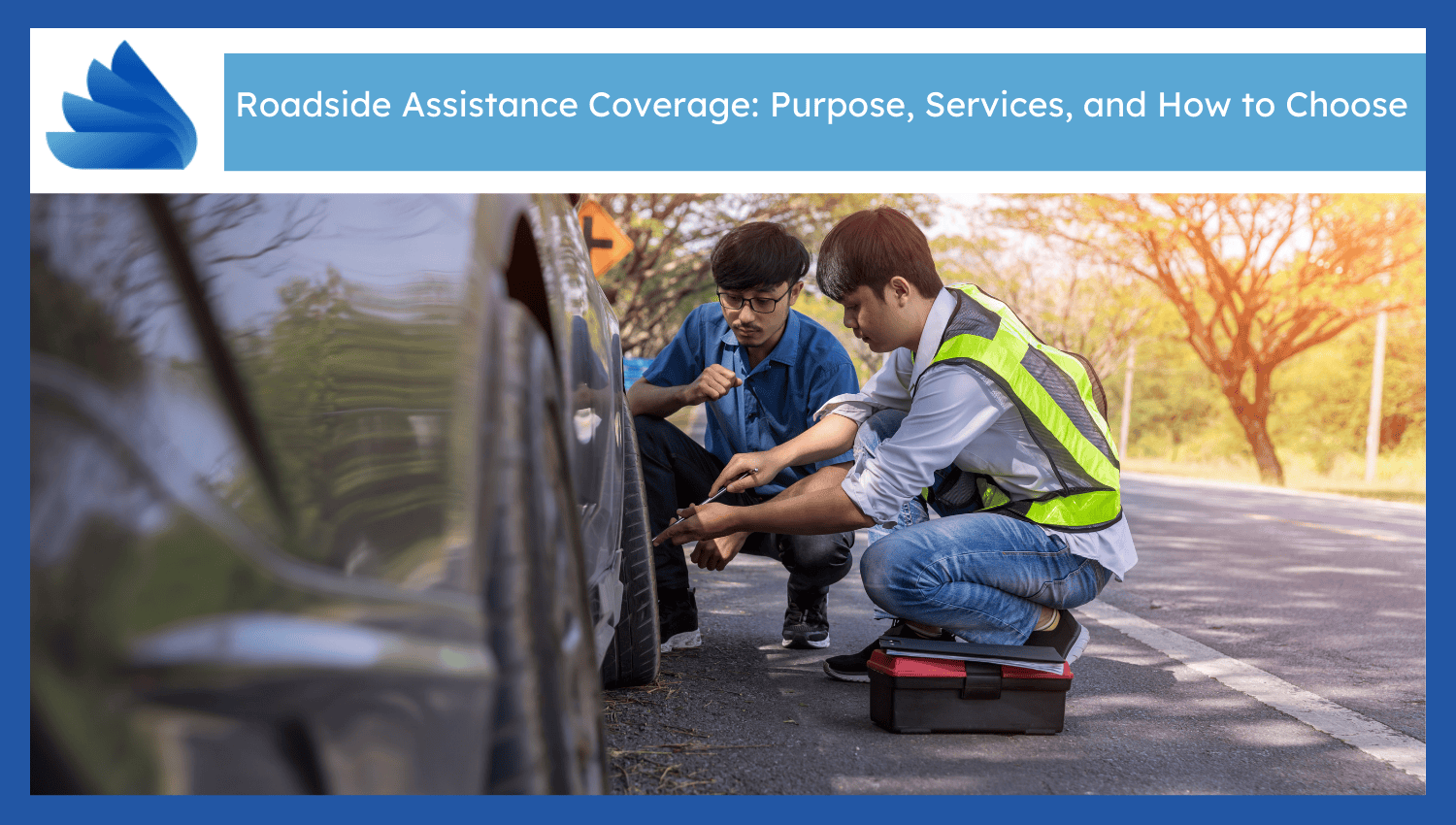
Roadside Assistance Coverage: Purpose, Services, and How to Choose
Roadside assistance is useful when the car breaks down because of mechanical failure, flat tires, dead batteries, and keys accidentally locked inside the car. It helps motorists during emergencies. It does not provide cover on crashes, theft or insurance liabilities.
The service encompasses five primary services: towing, jump-starts, tire change, fuel delivery, unlocking vehicles. In a Agero’s 2023 benchmark survey, 55 percent of drivers experienced a breakdown at the roadside at least once a year. Flat tires and battery jumps were the causes of half of them. That affirms the significance of these five services.
Roadside assistance to insurance adds between 10 to 50 dollars yearly. The total cost of purchasing a standalone plan is 50 to 120 dollars annually. Add-ons are cheaper. Full plans have extended service regions and provide rapid responsiveness.
What Services Are Included in Roadside Assistance Coverage?
Here are the six services included in Roadside Assistance Coverage:- Towing Services: When cars cannot move as a result of engine failure, heating, or accidents, towing occurs. Most plans include 5 to 15 miles. Some provide up to 100 miles based on the level of plan and provider regulations.
- Battery Jump-Start: A jump-start is useful when a battery fails or when the car is non-functional because of electrical defects. The technician restarts the car by utilizing jumper cables or any battery pack. This service does not include new batteries.
- Flat Tire Change: This service aids in swapping a flat tire with the spare vehicle. The vehicle must possess a functional spare tire. In the event there is no spare available, the provider offers towing.
- Fuel Delivery: Fuel is supplied when the automobile runs out of gasoline. The majority of the plans carry 2 to 5 gallons. Other providers add the cost of fuel whereas others charge separately on the amount supplied on delivery.
- Lockout Assistance: Lockout service assists in cases of keys being found in the car. A technician applies tools to open the locked door without damage. This service does not involve key cutting or generating a new smart key.
- Winching/Extrication: Winching is used to pull a car stuck in mud, snow or shallow ditches. The vehicle has to be close to a major road. The majority of plans feature one service vehicle. Others include additional assistance in case of additional trucks.
How to Choose the Right Roadside Assistance Plan?
Here are the six ways to choose the right roadside assistance plan:- Compare Coverage Options: Compare what each plan entails. Seek towing distances, battery jump-starts, gas delivery, lockout assistance, and tire replacement. Basic plans cover 5 services, but premium plans are more featured and have a higher towing miles.
- Service Area Reach: Ensure that the plan is in areas where you drive frequently. There are some that cover only the cities, and those that also support rural and highway routes. Always verify whether your residential area and your traveling routes are covered.
- Test Provider Network: Good network also translates to faster assistance. Those plans that have more local partners deliver help quicker. Large networks minimize delays in outlying areas as well. Larger providers tend to have 10,000+ service trucks across the country.
- Review Response Times: A quicker response saves time on down-time. The majority of services reach in 30-60 minutes. Plans with shorter wait time enhance safety and decrease stress levels in case of emergency, particularly at night or in risky areas.
- Review Customer Reviews: Reviews and ratings on the internet reflect the actual user experience. Better reviews indicate better service. Pay attention to the feedback regarding speed, politeness and problem resolution. Select plans that have predictable 4-stars or more ratings.
- Assess Membership Fee: View annual prices or cost per use. Add-on plans typically require a payment of 10-50 dollars per year. Full plans cost between 50 to 120 dollars. Weigh prices with the number of included services and distance limits.
How to Use Roadside Assistance Coverage?
Here are the six ways to use Roadside Assistance Coverage:- Call the Emergency Hotline: When you experience a problem, immediately call the 24/7 emergency number of the provider. This facilitates easy access to help. Save this number in your phone or in your vehicle to quickly access it when you break down.
- On the Mobile App: Contact roadside assistance app in case of emergency. The app automatizes your GPS location and shares it with the service team to search and get to you quicker. This saves time wasted in waiting and enhances accuracy of response in emergencies.
- Give Crucial Information: When you call or use the app, clearly explain the problem with make, model, color, and exact location of your vehicle. This aids the service provider in bringing the right equipment and locating you in a rapid and precise manner.
- Check Availability of Services: Make sure your problem is covered by your roadside assistance plan before service begins. This avoids instances of surprise charges. Being aware of what is in your plan means not waiting to be assisted when the help might not even be there to deal with your particular situation.
- Waiting Ways to Stay Safe: Find a cozy spot where there is no moving traffic. Fix marker lights to alert oncoming traffic. Remain in the vehicle when you sense unsafe outside conditions or lowered visibility, particularly on nights or during bad weather.
- Follow the Service Vehicle: A significant number of the providers have live tracking via app or web. This allows you to view the location and expected time of arrival of the technician. Following minimizes confusion and enables you to be ready when the helper comes to your position.